Table of Contents
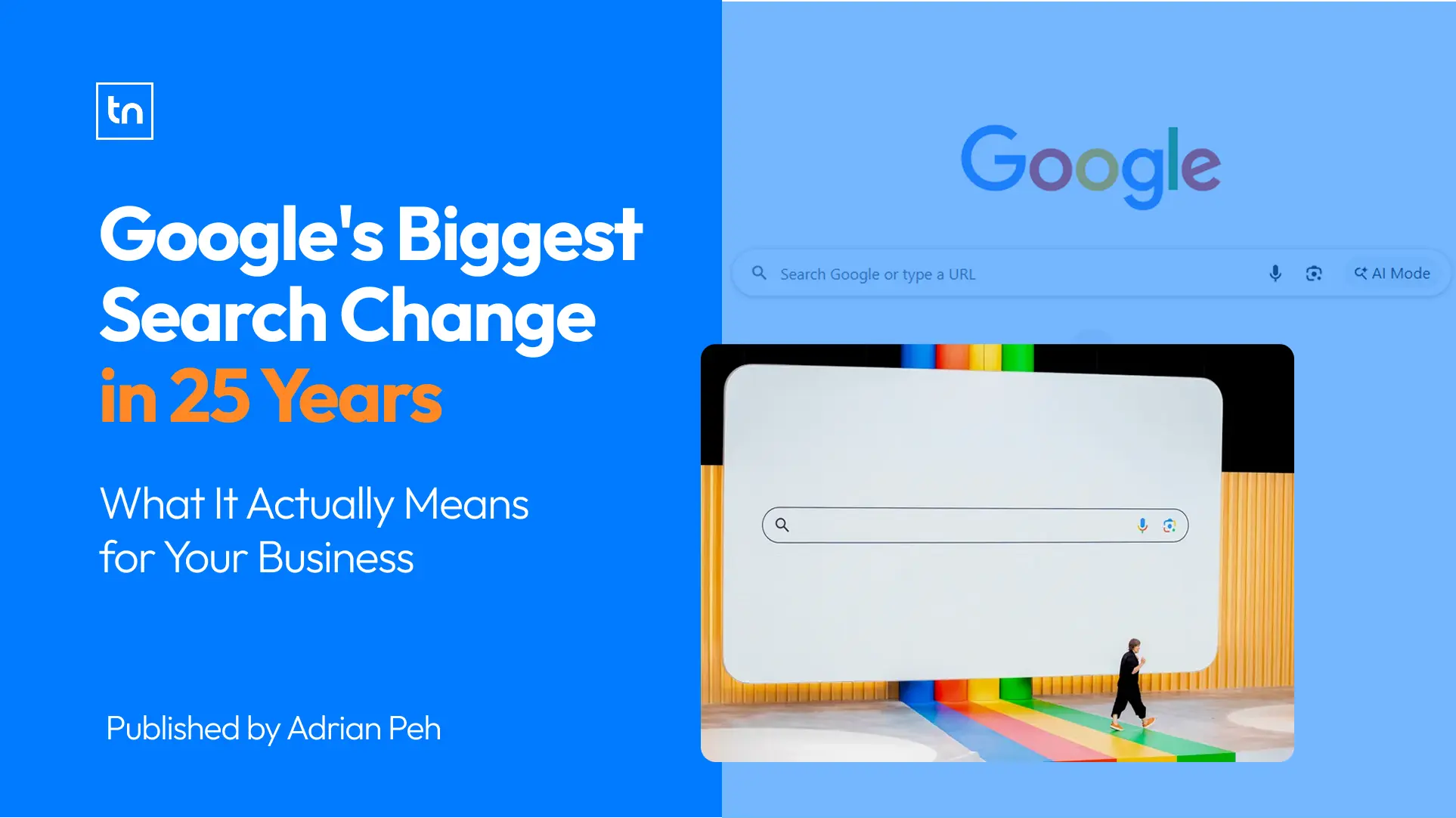
The Google search bar that has sat at the centre of the internet since 2001 is evolving into something fundamentally different: an AI-powered interface designed to answer questions, complete tasks, and guide decisions conversationally rather than simply returning links.
At its annual developer conference, Google unveiled its biggest shift in search in more than 25 years, introducing an AI-powered search experience built around Gemini that operates more like a conversation than a traditional query.
If you run a business that depends on Google traffic, whether you are an agency, a local service provider, or an ecommerce store, this is the moment to pay close attention. The consequences will be uneven, and the businesses that adapt early will be the ones still standing in two years.
📌 TL;DR:
- Google has updated its traditional search bar with a conversational AI experience for the first time since 2001, powered by Gemini 3.5 Flash.
- AI agents embedded in search can now monitor topics, automate research tasks, and even call local businesses to make bookings on a user’s behalf.
- SEO agencies still selling keyword rankings and backlink packages without building real authority are heading for a reckoning.
- Local businesses with incomplete Google profiles and weak review strategies will become invisible to AI-assisted search.
- Ecommerce brands with thin content and no topical authority will face a rapid traffic decline as AI search becomes the default.
- Brand authority, domain authority, and genuine expert content are now the only sustainable competitive advantages in search – if you don’t stand out, you lose.
What Google Actually Changed
The new search experience is a significant departure from what most people are used to. Here is what is actually changing:
- Longer, conversational queries – The search bar now accepts complex, natural-language questions rather than short keyword phrases.
- Multimedia input – Users can upload photos and videos directly into search queries.
- AI Overviews replace links – Instead of a list of websites, Google generates a direct AI response at the top of the page.
- Embedded chatbot – Users can ask follow-up questions without leaving the search results page.
- AI agents. Users can set agents to monitor topics over time and get notified without ever opening another site.
- Real-time mini-apps – For complex research queries, Gemini builds interactive graphics and simulations on the fly.
This is not a visual refresh. This is a structural shift in how information is delivered, and it has enormous implications for everyone who has built a business model around Google traffic.
The Huge Shift for Local Businesses
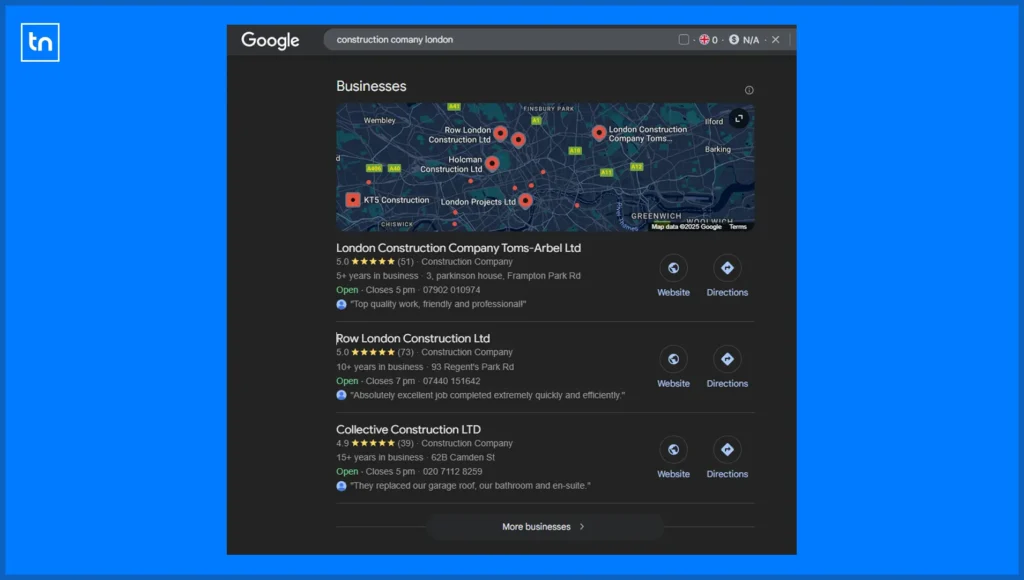
This is the part of Google’s announcement that I think has been most underreported, and it is the part that will hit local businesses hardest and fastest.
Google is introducing AI agents that can call local businesses on a user’s behalf and make bookings directly.
Think about what that means in practice. A user does not search for a restaurant, browse the results, visit the website, and call to reserve a table. They ask Google to book them a table for Saturday. The AI agent handles the call. The user never interacts with the business directly until they walk through the door.
For local businesses, this compresses the entire customer journey into a single AI interaction. The signals Google uses to decide who to recommend become everything:
- Your Google Business Profile completeness
- Your review volume and average rating
- Your response times
- Your structured data markup
Businesses with incomplete profiles, poor reviews, or no presence on Google’s trusted data sources will simply be skipped. The AI agent is not going to scroll past the fold to find you.
This is both a threat and an opportunity. Local businesses that invest now in their Google presence and review strategy will be the ones the AI recommends. Those that rely on walk-ins and word of mouth without a digital foundation will find themselves progressively invisible.
What This Means for Ecommerce Businesses
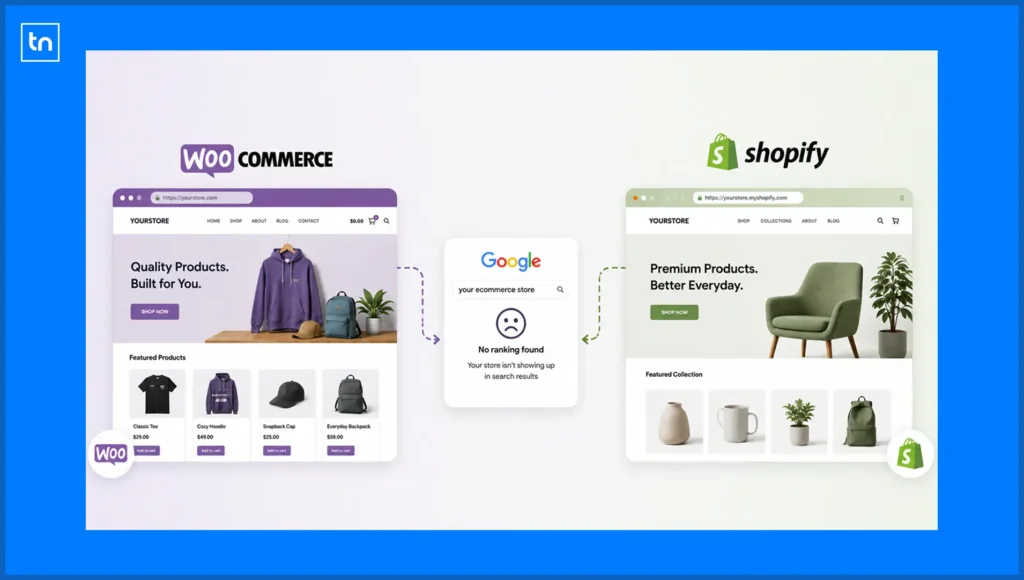
Ecommerce is where I expect the most significant disruption, and the most significant divergence between businesses that have been building properly and those that have been cutting corners.
Google is rolling out an AI-powered shopping experience that allows users to build a cart directly within search or YouTube without ever visiting a merchant’s website. The AI will:
- Recommend products based on user context
- Flag discounts when items go on sale
- Warn users about compatibility issues between products
The product discovery phase, which was the moment ecommerce brands competed to win with SEO, is now happening entirely within Google’s ecosystem.
For brands with strong domain authority and topical authority in their product category, this creates a real opportunity. Google’s AI needs to pull product recommendations from somewhere, and it will pull them from the most trusted sources in each category.
For thin-content ecommerce sites that have relied on paid backlink campaigns, engagement manipulation through ads, and minimal editorial investment, the future is bleak. I want to be direct about this:
Google’s AI does not reward sites that look trustworthy. It rewards sites that are trustworthy. There is a meaningful difference between those two things.
The End of the Thin Content Ecommerce Model
The playbook I am describing, the one that is failing, goes like this:
- Launch an ecommerce store with templated product descriptions
- Publish lightweight blog content written at speed with no real expertise behind it
- Buy backlinks or run aggressive outreach campaigns to inflate domain authority metrics
- Use paid advertising to drive enough sessions to produce engagement signals that lift organic rankings
- Repeat at scale
That model worked, up to a point. It worked because Google’s ranking systems were imperfect enough to be gamed. The introduction of AI-powered search does not just make that model harder. It makes it structurally redundant.
When Google is using an AI model trained on the entire web to generate answers and product recommendations, surface-level authority signals matter far less than the quality and depth of the actual content on your site.
Topical authority is the new competitive moat for ecommerce. A cycling brand that has published a genuinely comprehensive library of expert content about bikes, components, maintenance, and riding technique is a brand that Google’s AI will learn to treat as a credible source. A cycling brand with the same number of backlinks but thin, templated content gets excluded from AI-generated recommendations even if it currently ranks on page one.
What This Means for SEO Agencies and Digital Marketing Agencies
The agencies that will struggle are the ones still selling the same deliverables they were selling in 2019.
- Ranking reports
- Keyword clusters
- Backlink packages
- 1,000-word blog posts written to target a single phrase
That model is collapsing in real time.
When Google delivers an AI Overview at the top of the page, the traditional first-position organic result loses a large portion of its click-through rate. Users get their answer directly from Google without visiting any site.
That dynamic has been building since 2024 when Google first introduced AI Overviews at scale. The new conversational search interface accelerates it significantly. Agencies that have been telling clients to chase rankings without building real authority are going to have a very difficult conversation coming.
The value is no longer in getting a page to rank for a keyword. The value is in becoming the source Google’s AI cites when it generates an answer.
That requires a fundamentally different kind of content strategy, one built on genuine expertise, topical depth, and demonstrable authority in a specific domain. Agencies that can deliver that will thrive. Agencies that cannot will find their retainers cancelled as clients start questioning why organic traffic is falling while their rankings look fine on paper.
Brand and Domain Authority Matter More Than Ever
Google wants to surface answers from sources people trust. For brands, the investment in becoming recognisable has compounding returns in an AI search environment. That means:
- Being mentioned by name across the web
- Earning press coverage and editorial links
- Building a consistent brand reputation across platforms
Domain authority built through genuine editorial links is not a vanity metric. It is a signal that tells Google’s AI that real publications and real experts consider your site a credible source.
Combined with topical authority built through genuinely expert content, that is the combination that positions a brand to be cited, recommended, and surfaced in AI-generated responses.
The businesses investing in this now are building an asset that becomes more valuable as AI search matures. The businesses ignoring it are depleting an asset they did not realise they were burning through.
The Real Competitive Advantage Going Forward
Google’s AI has to get its information from somewhere. Every AI Overview, every product recommendation, every agent-generated response is built from signals and content that exists on the web.
The question for every business is whether they are one of the sources Google’s AI trusts enough to cite.
Earning that trust requires three things working together:
- Brand presence – Credibility signals through editorial mentions, genuine backlinks, and consistent reputation across platforms.
- Topical authority – Deep, expert-written content that demonstrates real knowledge, not just keyword coverage.
- Technical foundations – Clean, well-structured sites that allow Google to crawl and understand exactly what you sell and who you serve.
Businesses that have been cutting corners on any of those three will feel the pressure over the next 12 to 24 months. Businesses that have been doing the hard work will find themselves in an increasingly strong position as low-quality competition drops away.
My Take
Google removing the traditional search bar is not a gimmick. It is not a cosmetic update.
It is the most consequential structural change to search since Google itself became the dominant search engine, and it has been building for years.
The businesses and agencies that have been treating SEO as a technical game of signals and shortcuts are going to find that game has fundamentally changed. The businesses that have been building genuine authority, publishing real expertise, and earning real trust have been playing the right long game all along.
The gap between those two groups is about to get a lot wider, a lot faster.