Table of Contents
If your ecommerce store isn’t showing up on Google, you’re losing sales to competitors who are. It’s rarely one problem. Most stores that struggle to rank have a combination of technical issues, weak content, and pages that don’t match how buyers actually search.
The good news is that these are all solvable. This guide walks through the most common reasons ecommerce stores fail to rank on Google and what you can do to fix each one.
📌 TL;DR:
- If your pages aren’t indexed by Google, they can’t rank. Check Google Search Console first.
- Most stores target keywords they want to rank for, not the ones buyers actually search.
- Copied manufacturer descriptions and thin product pages give Google no reason to rank you over competitors.
- Technical issues like duplicate URLs, slow page speed, and missing canonical tags block rankings even when your content is good.
- Without backlinks and supporting content, you lack the authority and topical depth to compete in most product categories.
Why Do Ecommerce Stores Struggle to Rank on Google?
Ecommerce sites face ranking challenges that most other websites don’t. Large product catalogues create duplicate content problems. Category pages compete with product pages. Manufacturer descriptions get copied across dozens of retailers. Google has no reason to rank your store if it can’t tell what makes your pages different or more useful than anyone else’s.
The stores that rank consistently have three things in common: their site is technically sound, their pages match search intent, and they’ve built enough authority for Google to trust them. If any of those three are missing, rankings suffer.
Is Your Site Actually Indexed by Google?
Before anything else, check whether Google has indexed your store. If your pages aren’t in Google’s index, they can’t rank, regardless of how well they’re optimised.
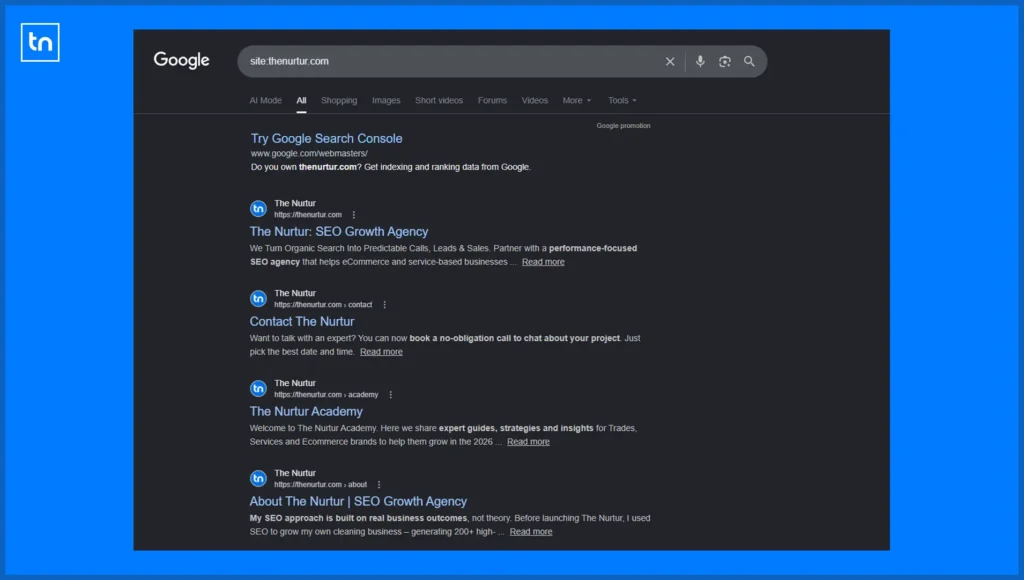
You can check this by searching “site:yourdomain.com” in Google. If few or no pages appear, you have an indexing problem. Common causes include:
- A missing or unsubmitted XML sitemap
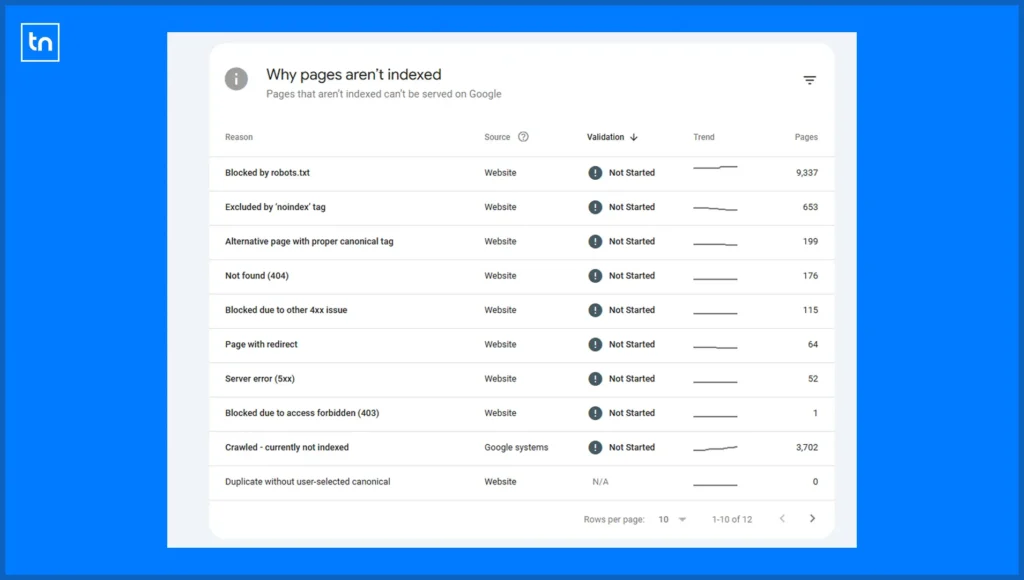
- Pages blocked in your robots.txt file
- A noindex tag applied to pages by mistake
- A new domain that Google hasn’t crawled yet
Google Search Console will show you exactly which pages are indexed, which are excluded, and why. If you haven’t set it up, that’s the first step. A proper website SEO audit will surface these indexing issues quickly and tell you what needs fixing.
Are Your Product and Category Pages Targeting the Wrong Keywords?
Most ecommerce stores target keywords they think sound right, not the phrases buyers actually search. A clothing store might optimise for “premium cotton shirts” when shoppers are searching “men’s white Oxford shirt UK.” The difference matters because Google matches pages to queries, not to your preferred phrasing.
The fix is straightforward: research how your customers describe what they want to buy, not how you describe what you sell. Use Google’s autocomplete, the “related searches” at the bottom of results pages, and the People Also Ask boxes to understand real search language.
Product pages should target specific, purchase-ready searches. Category pages should target broader terms. When both target the same query, they compete against each other and neither ranks well.
Does Your Content Give Google a Reason to Rank You?
Thin content is one of the most common reasons ecommerce stores don’t rank. If your product descriptions are copied from a manufacturer, Google has already seen that content on dozens of other sites. There’s no reason to surface yours above theirs.
Google rewards pages that genuinely help buyers make a decision. That means product pages with:
- Original descriptions that explain who the product is for and what makes it useful
- Real customer reviews that add unique, first-hand detail
- Answers to common pre-purchase questions (sizing, compatibility, delivery)
- Clear information on returns and what to expect after purchase
Category pages need descriptive introductions that contextualise the range. A blank category grid with no supporting text gives Google nothing to work with.
If you’re on Shopify or WooCommerce, a specialist ecommerce SEO agency can audit your content and identify which pages need the most attention before you spend time rewriting everything at once.
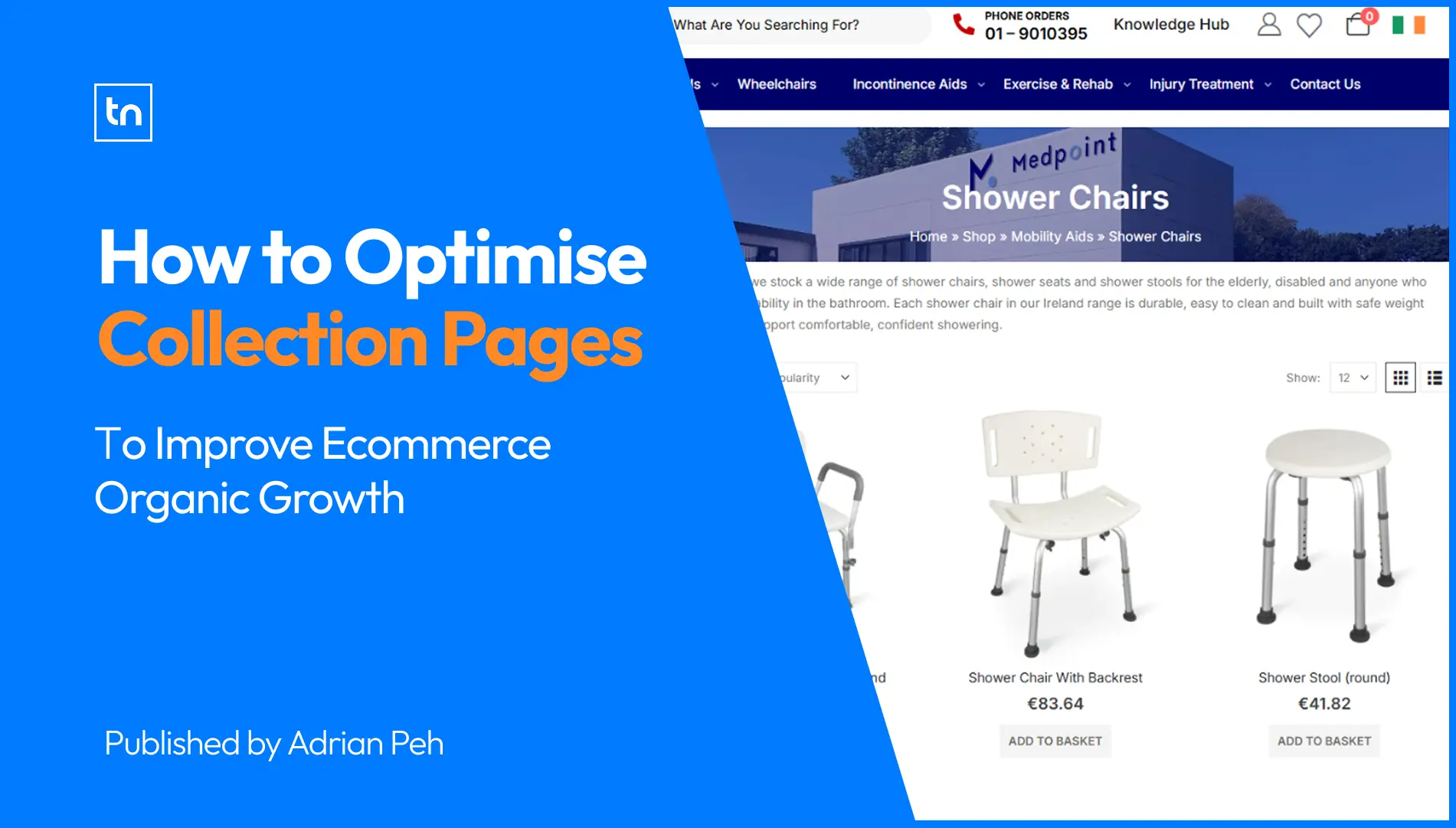
Learn how to optimise your collection pages to rank.
Are Technical Problems Stopping Google From Crawling Your Store?
Technical SEO won’t rank your store on its own, but without it, nothing else will work as well as it should. Ecommerce sites are particularly vulnerable to technical issues because of their size and how they’re built.
The most common technical problems that hurt ecommerce rankings include:
- Slow page speed: A slow-loading store loses both rankings and conversions. Google’s own data suggests a significant share of users abandon a site that takes longer than three seconds to load on mobile.
- Duplicate content: Filter pages, sort parameters, and pagination often create hundreds of near-identical URLs that dilute your crawl budget and confuse Google about which page to rank.
- Broken internal links: Dead links prevent Google from discovering and indexing your full catalogue.
- Missing or incorrect canonical tags: Without these, Google doesn’t know which version of a page to index when duplicates exist.
- Poor mobile performance: Google indexes the mobile version of your site first. If the mobile experience is poor, your rankings will reflect that.
If you’re unsure where your site stands technically, technical SEO services can run a full crawl and prioritise what to fix based on ranking impact, rather than leaving you guessing.
Does Your Store Have Enough Authority for Google to Trust It?
Google uses backlinks as a trust signal. If no other websites are linking to your store, you’re asking Google to rank you on content alone against established competitors who have years of links built up. That’s a hard position to rank from, especially in competitive product categories.
Authority building doesn’t have to mean chasing thousands of links. A smaller number of links from genuinely relevant, trusted UK sites carries far more weight than bulk link-building from unrelated sources. Industry blogs, product review sites, local press coverage, and supplier directories are all worth pursuing.
It’s also worth looking at your internal linking. Clear internal links between category pages, product pages, and supporting content help Google understand the structure of your site and pass authority between pages.
Is Your Store Matching Search Intent at Every Stage?
Not every customer arrives ready to buy. Some are researching. Some are comparing. Some want to know whether your product will solve their specific problem. If your store only targets transactional searches, you’re invisible to buyers during the research phase and you lose the sale to whoever was visible earlier.
Supporting content, such as buying guides, comparisons, and how-to articles, builds topical authority and captures buyers before they’ve decided. It also signals to Google that your site covers a subject in depth, which helps your product and category pages rank better too.
If your store runs on Shopify, this is a well-known gap. An SEO agency for Shopify can map out the content your store needs to cover the full buying journey, not just the final purchase decision. WooCommerce stores face similar challenges, and WooCommerce SEO services can audit both the technical setup and the content gaps specific to that platform.
How Long Does It Take for an Ecommerce Store to Rank on Google?
There’s no fixed timeline, but most stores with reasonable domain history can expect to see meaningful movement within three to six months of making the right changes. New domains take longer because Google needs time to establish trust.
The areas that tend to produce the fastest improvement are technical fixes and on-page content. Indexing problems resolved quickly can recover rankings within weeks. Authority building takes longer but compounds over time.
What doesn’t work is waiting. If the underlying problems aren’t addressed, rankings don’t recover on their own.
Conclusion
Most ecommerce stores aren’t ranking because of a combination of problems that have built up over time: pages that aren’t indexed, content that doesn’t stand out, technical issues that slow Google down, and too little authority to compete. None of these are permanent. Each has a clear fix, and fixing the right things in the right order produces results that compound as the store grows.
If you want to understand exactly where your store is losing ground, working with a focused SEO agency that specialises in ecommerce is the fastest way to get a clear picture and a structured plan.
FAQs
If your store isn’t appearing in Google searches, the most likely cause is an indexing problem. Check Google Search Console to see whether your pages have been indexed, and run a “site:yourdomain.com” search to see what Google currently has in its index. Common culprits include a noindex tag applied in error, pages blocked in robots.txt, or a sitemap that hasn’t been submitted.
There’s no single answer, but product pages on established domains can start seeing movement within a few weeks of being indexed and optimised. More competitive queries can take three to six months of consistent work. New domains typically take longer because Google needs time to build trust in the site before rewarding it with rankings.
Yes. If your product descriptions are copied from a manufacturer or replicated across multiple pages, Google has little reason to rank your version over another site using the same text. Unique descriptions that add real detail, answer buyer questions, and explain what makes your product useful are far more likely to rank and convert.
They do. Category pages are often the strongest ranking opportunity on an ecommerce site because they match high-volume, broad product searches. Without introductory copy that gives Google context about the page, a category grid is little more than a list of images. Even a well-written paragraph or two significantly improves how Google understands and ranks the page.
Duplicate content created by URL parameters is the most widespread technical issue on ecommerce sites. Filters, sorting options, and pagination generate multiple URLs for what is effectively the same page. Without canonical tags or proper parameter handling in Google Search Console, this wastes crawl budget and dilutes rankings. A technical SEO audit will identify how widespread the problem is across your store.