Table of Contents
Ecommerce SEO is not instant, and anyone who promises results in a few weeks is guessing. But it is not a mystery either. How long ecommerce SEO takes to work follows a fairly predictable pattern, and knowing it helps you judge progress honestly.
This guide explains the realistic timeline by stage, what speeds results up or slows them down, and what real ecommerce stores achieved. It is written for store owners who want to plan their budget and patience around facts, not promises.
📌 TL;DR:
- Early signs such as indexing and impressions can appear within weeks, but sales usually follow later.
- Most stores see clear traction in three to six months and meaningful revenue growth in six to twelve.
- Competition, your starting point and catalogue size change the timeline more than anything else.
- Track leading indicators such as impressions, rankings and clicks before revenue moves.
- Fixing technical problems first and focusing on revenue pages gets results sooner.
How Long Does Ecommerce SEO Take to Work?
Most ecommerce stores see early movement within a few weeks, clearer traction in three to six months and meaningful revenue growth in six to twelve months. Shopify’s own guide says most sites see measurable results in three to six months, while highly competitive categories can take twelve months or more.
These are ranges, not promises. A store with a technical problem blocking its best collections can move faster once it is fixed, and a new store in a crowded category can take longer.
What Happens in Each Stage of an Ecommerce SEO Campaign?
An ecommerce SEO campaign moves through stages, and each one produces different signs of progress. Knowing which stage you are in stops you from judging a young campaign by revenue alone.
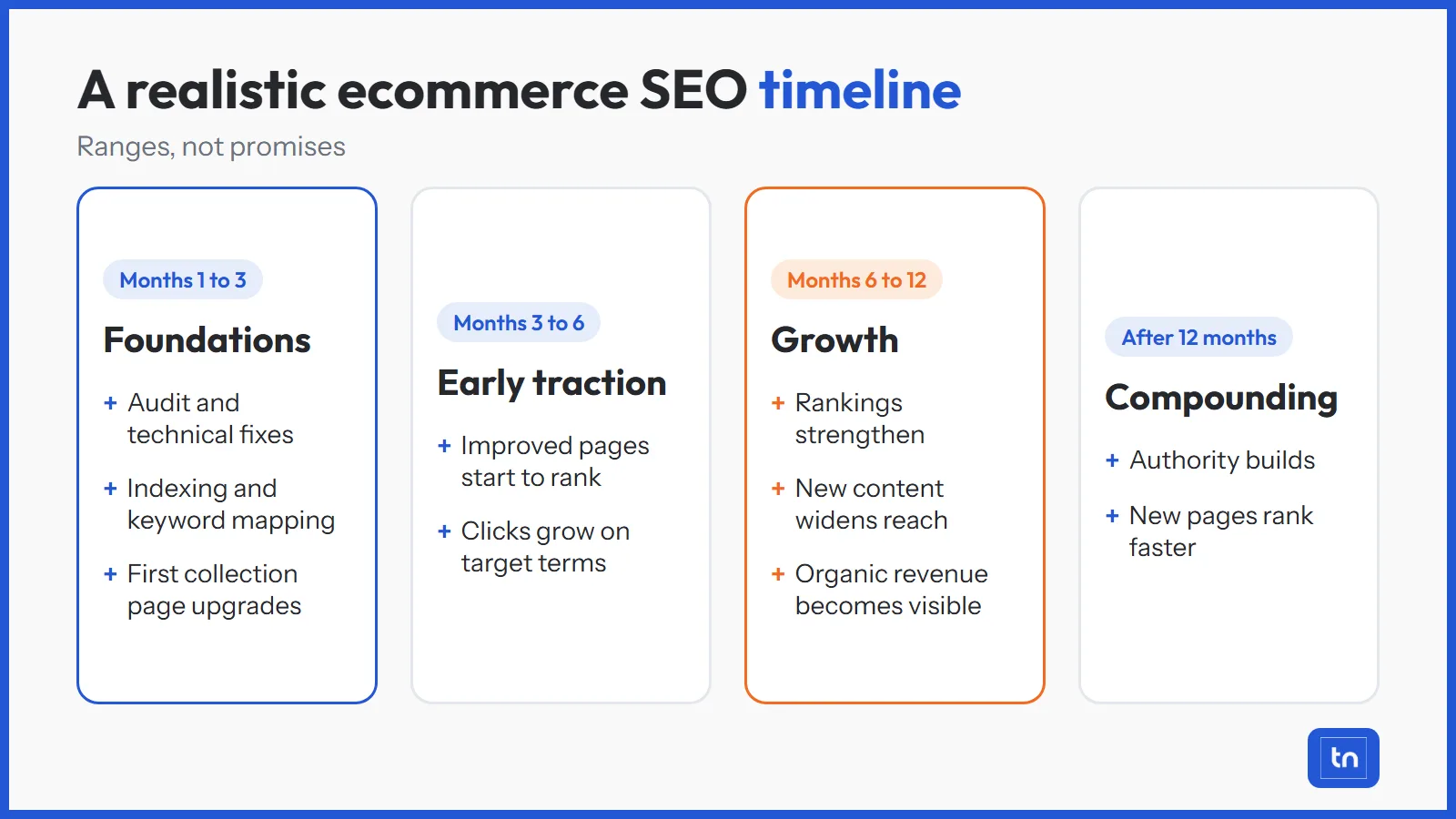
- Months 1 to 3, foundations: audit, technical fixes, indexing, keyword mapping and the first improvements to collection pages. Impressions and indexed pages often rise first.
- Months 3 to 6, early traction: improved collection and product content starts to rank, and clicks on target terms begin to grow.
- Months 6 to 12, growth: rankings strengthen, new collections and content widen your reach, and organic revenue becomes visible in your reports.
- After 12 months, compounding: authority builds, new pages rank faster and cost per sale tends to fall.
What Affects How Long Ecommerce SEO Takes?
Your starting point and your market decide the timeline more than the SEO work itself. Two stores can follow the same plan and see very different speeds.
- Site age and authority: established sites with trusted backlinks usually move faster than new ones.
- Competition: crowded categories with strong competitors take longer than niche ones.
- Technical health: blocked pages, slow templates and duplicate URLs delay everything else until fixed.
- Catalogue size: large catalogues need more pages improved and more crawling time.
- Content quality: strong collection pages that match search intent rank sooner than thin ones.
- Consistency: stopping and restarting work resets momentum.
What Do Real Ecommerce SEO Results Look Like?
Real ecommerce results show both the pace and the shape of growth. Three of our case studies give examples with their timeframes.
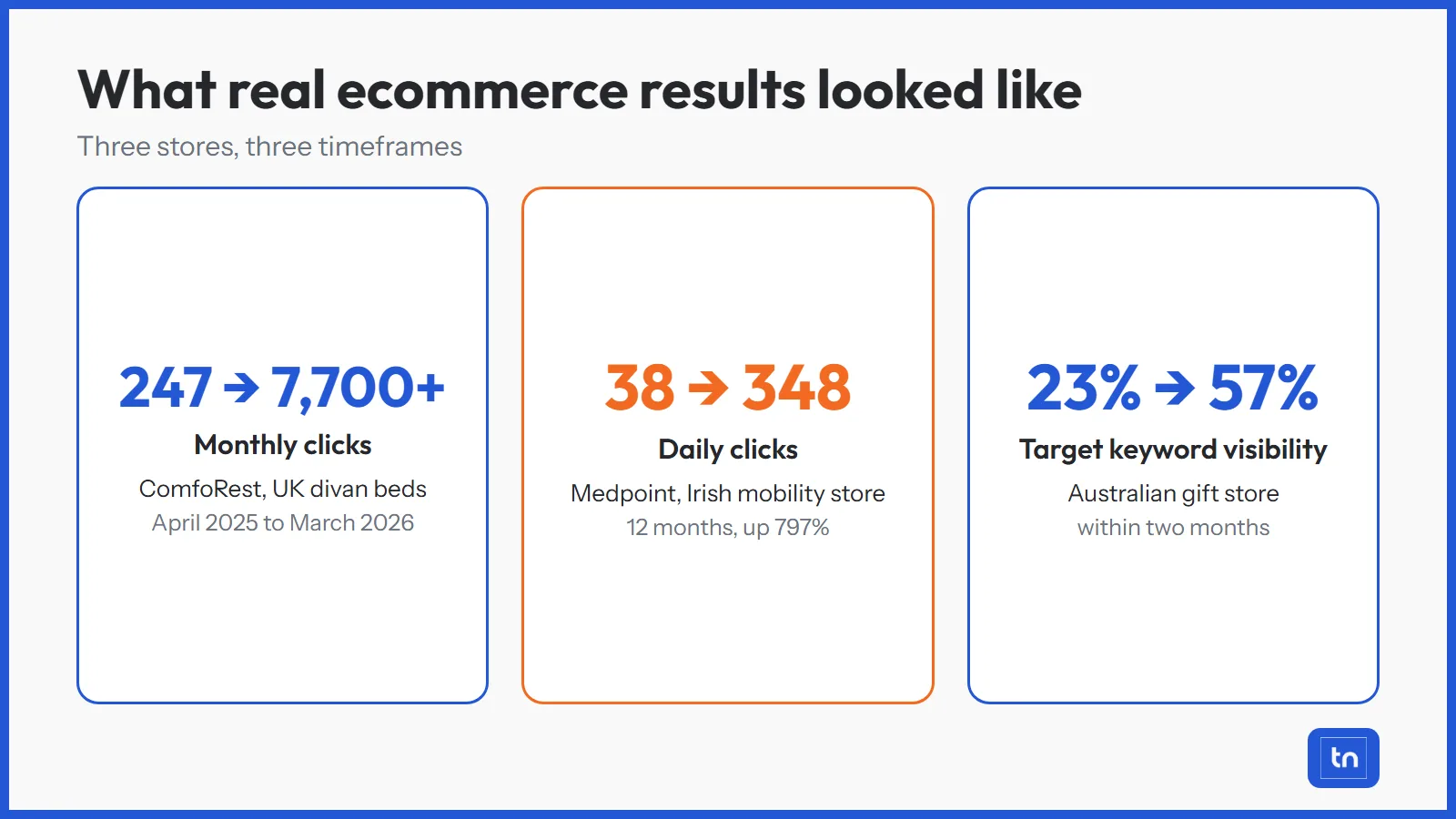
- ComfoRest, a UK divan bed store: monthly clicks rose from about 247 in April 2025 to a peak of over 7,700 by March 2026, roughly eleven months, after duplicate content on category pages was resolved. See the ComfoRest case study.
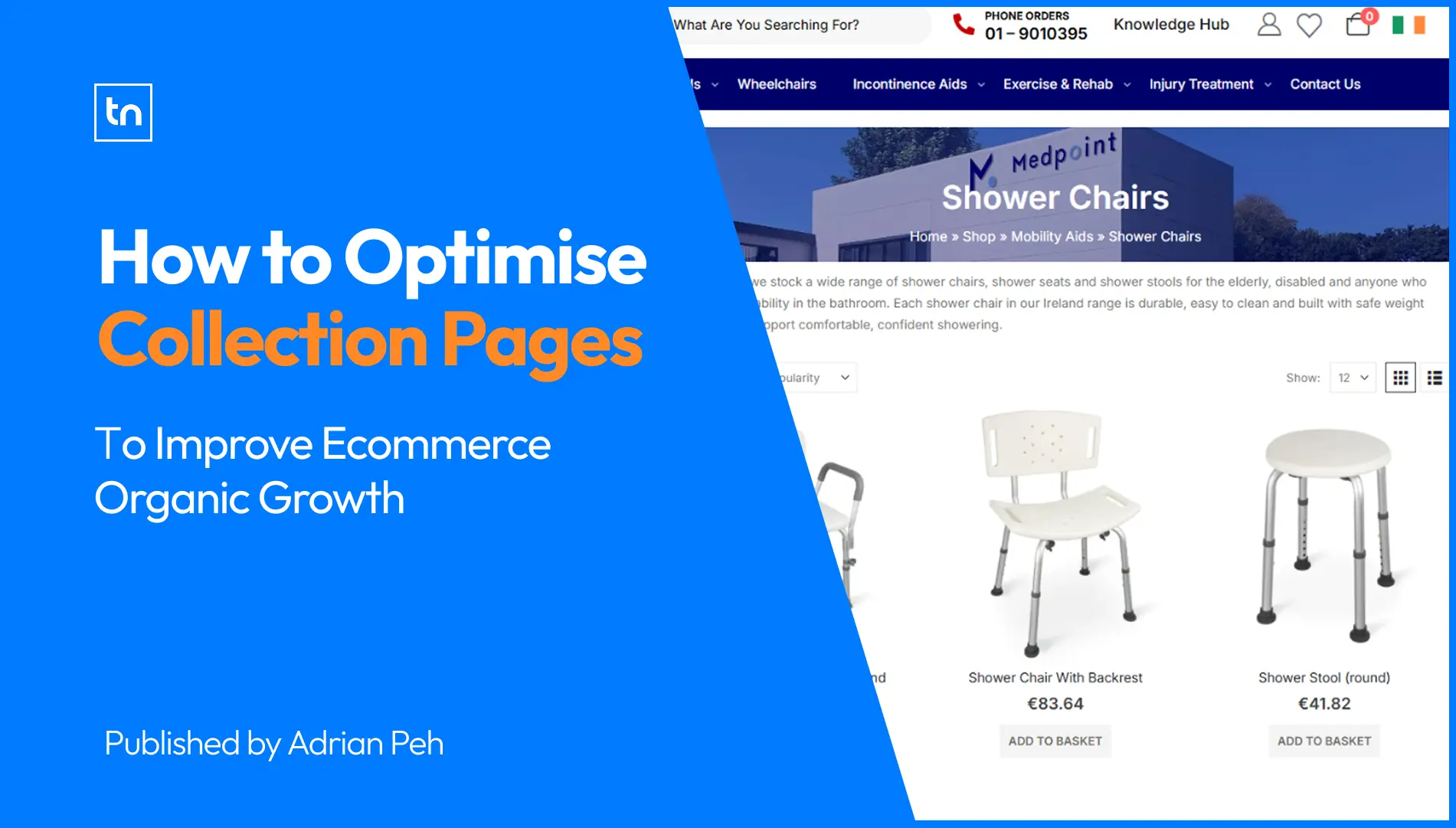
- Medpoint, an Irish mobility store on WooCommerce: organic traffic grew 797% over twelve months, from 38 to 348 daily clicks. See the WooCommerce case study.
- An Australian gift store: target keyword visibility rose from 23% to 57% within two months of realigning its keyword strategy, an early signal ahead of the revenue peak.
The pattern is consistent. Early gains are small and technical, and the large revenue gains arrive in the second half of the first year.
How Can You Tell Ecommerce SEO Is Working Before Revenue Moves?
Look at leading indicators, because revenue is the last thing to move. If these are improving, the campaign is on track even when sales have not changed yet.
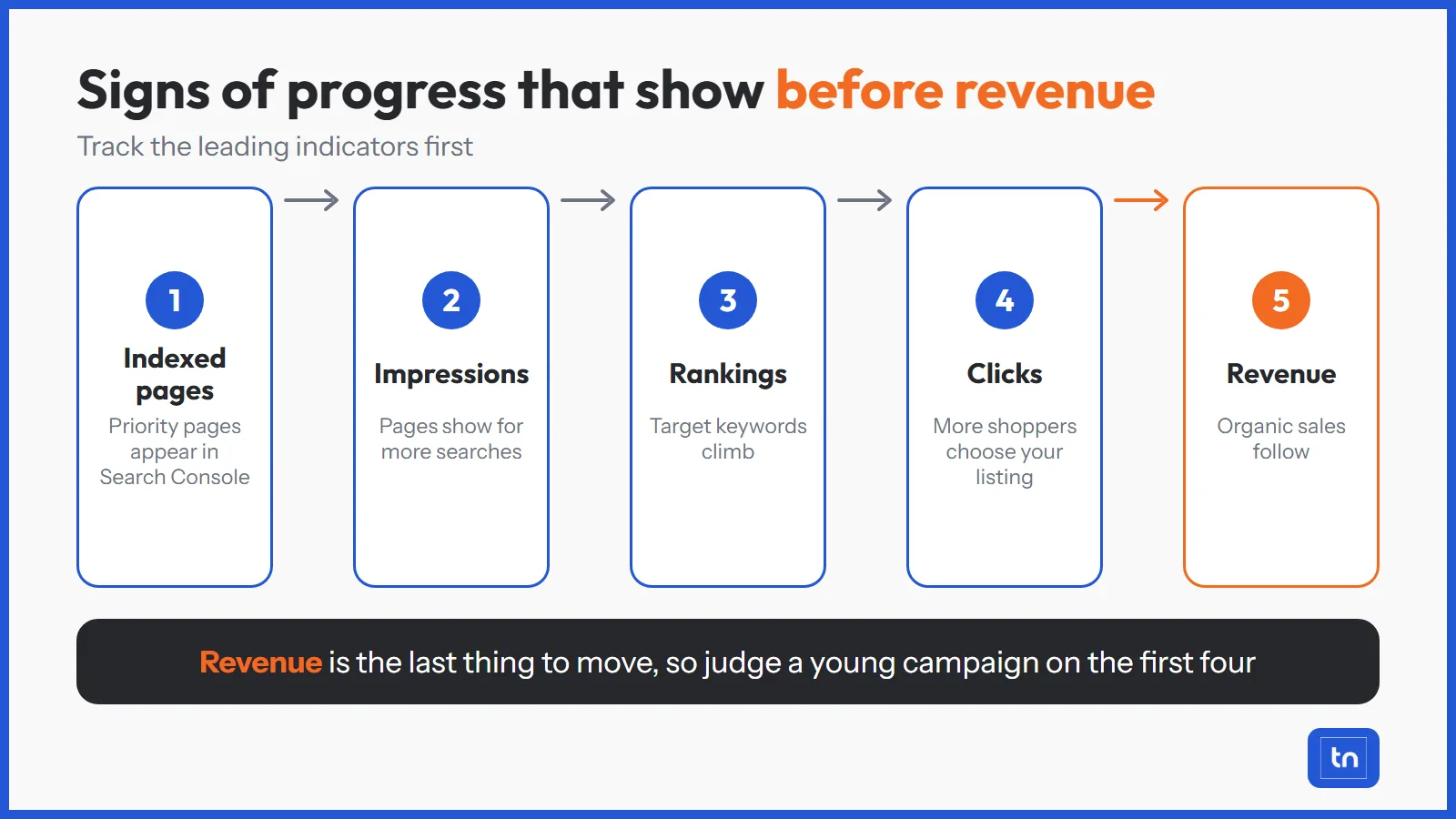
- Indexed pages: more of your priority collections and products appear in Google Search Console.
- Impressions: your pages appear for more searches.
- Rankings: target keywords climb into the top ten and then the top three.
- Clicks and click-through rate: more shoppers choose your listing.
- Revenue and conversions: organic sales follow once the earlier signals build.
What Mistakes Slow Ecommerce SEO Down?
Most delays come from avoidable mistakes, not from Google. These are the ones we see most often when a campaign takes longer than it should.
- Judging progress by revenue alone and changing strategy before the early signals have time to build.
- Writing new content while technical problems are still blocking crawling or indexing.
- Targeting keywords that are too competitive for the authority the site has today.
- Leaving thin or duplicate collection pages live, so they compete with each other.
- Stopping when early results are small, just before the compounding stage begins.
Can You Speed Up Ecommerce SEO Results?
You cannot force Google to move faster, but you can remove what slows you down. Start with the work that affects the most revenue.
- Fix technical blockers first. A website SEO audit finds crawling, indexing and speed problems that hold everything back.
- Focus on revenue pages. Improve the collections and products that already earn sales before expanding.
- Strengthen existing pages. Our on-page SEO services improve pages that already have impressions, which is usually quicker than building new ones.
- Build authority steadily. A planned link building approach supports the pages you want to rank.
- Use ads while SEO builds. Paid campaigns can cover early sales so you can stay patient.
The cost of this work is covered in our guide to how much SEO costs in the UK, and an ecommerce SEO agency can set a timeline for your store based on its starting point.
Conclusion
How long ecommerce SEO takes to work comes down to your starting point, your competition and the quality of the work. Expect early signs within weeks, clear traction in three to six months and meaningful revenue growth in six to twelve.
Set expectations around leading indicators, fix the technical foundations first and keep the work consistent. Stores that stay the course through the early months are the ones that see growth compounding in the second half of the year.
Frequently Asked Questions
Early signs, such as more indexed pages and rising impressions, can appear within a few weeks. Clearer ranking and traffic gains usually take three to six months, and meaningful revenue growth often takes six to twelve months for ecommerce stores.
Most ecommerce stores see results in stages. Technical and indexing improvements show first, ranking and click growth follow, and organic revenue is usually the last to move. Competitive categories can take twelve months or more.
New websites usually take longer than established ones because they have no authority or backlinks yet. A new store should plan for at least six to twelve months of consistent work before judging organic revenue, and can use paid ads to cover early sales.
No. AI search draws on web content that is crawlable, helpful and trusted, which is what SEO builds. The work is widening to include visibility in AI answers, but it still sits on strong traditional SEO foundations.
Yes. SEO still brings steady, high intent traffic that does not depend on a daily ad budget. It needs patience, but the return tends to grow over time as rankings and authority build.